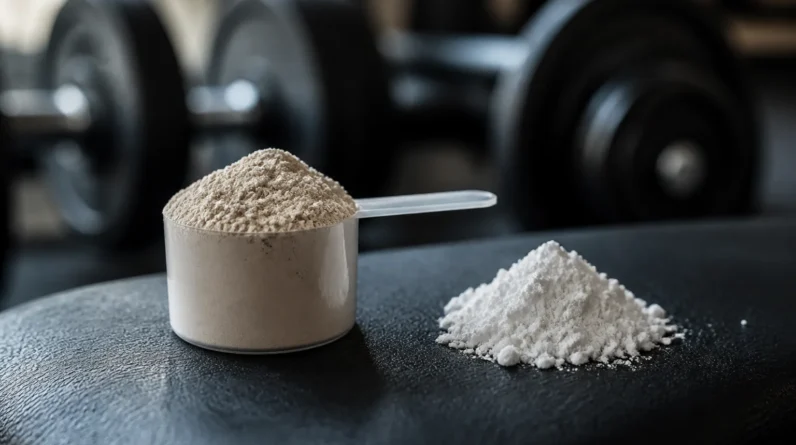
You can pursue muscle gain through body recomposition or lean bulking, but the available guidance doesn’t promise zero fat gain. Recomposition means reducing body fat while maintaining or increasing lean mass; lean bulking uses a controlled calorie surplus and aims to keep fat gain minimal. One suggested weight-gain rate for a muscle-building phase is 0.25–0.5% of body weight per week.
- Body recomposition can reduce body fat while maintaining or increasing lean mass, often without a change in total body mass.
- A suggested daily protein target is 1.6–2.2 g per kilogram of body weight.
- A suggested weekly body-weight increase is 0.25–0.5%.
- A suggested beginner starting point is two exercise sessions per week.
Pro Tip : To hit your protein target and train twice a week at home, you’ll need the right gear. Check my review of the Best Adjustable Dumbbells.
Is it possible to gain muscle without gaining any body fat, and what is body recomposition?
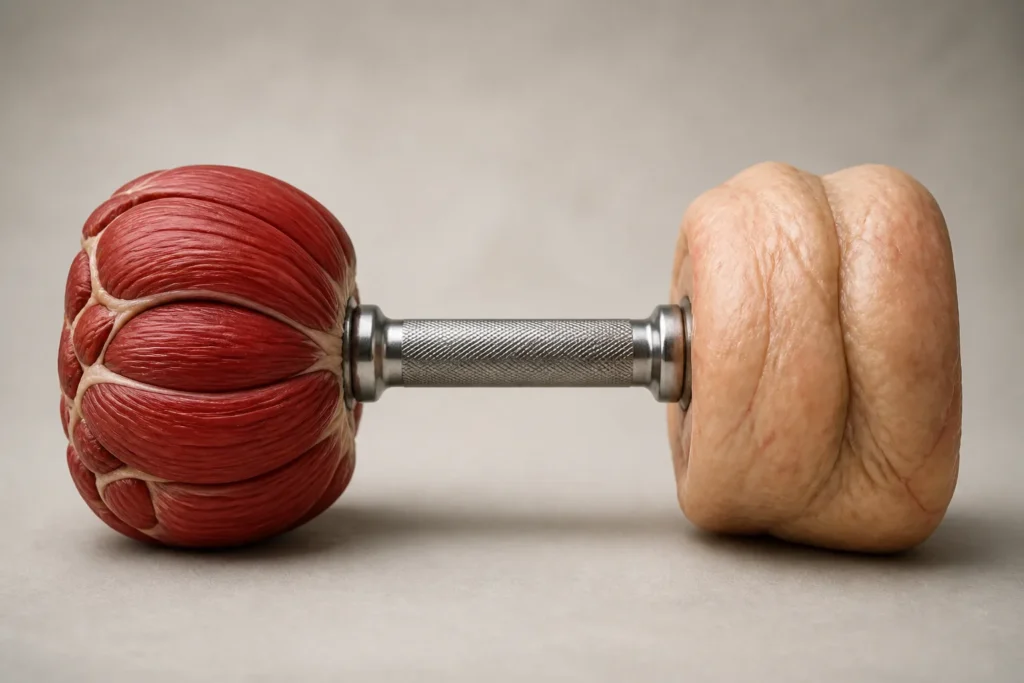
Muscle gain without any fat gain isn’t guaranteed: one source says it isn’t possible, while body recomposition is defined as gaining or maintaining lean mass while reducing body fat.Body recomposition focuses on body composition rather than scale weight, and can happen without a change in total body weight. It has been demonstrated in people with different training backgrounds and ages.
Lean bulking is different: it uses a controlled calorie surplus and aims to keep fat gain minimal, not to eliminate it. The definitions put the emphasis in different places:
| Approach | What it means |
|---|---|
| Body recomposition | Reduce fat while maintaining or increasing lean mass, often without changing total body mass. |
| Lean bulking | Gain muscle with a controlled calorie surplus, aiming to minimize fat gain. |
Neither description promises zero fat gain for every person.
How can you decide whether to build muscle at maintenance calories or use a small calorie surplus?
Choosing maintenance calories or a surplus depends on which approach you want to try, but the available claims don’t give a decision rule based on starting body composition. Body recomposition is one alternative: it focuses on building or preserving muscle while losing fat. For a surplus-based approach, one recommendation is to start by increasing calories by 10% and monitoring body weight. Another suggests a surplus of around 250–500 calories per day, adjusted according to progress.
The ledger doesn’t provide a method for calculating maintenance calories or estimating energy expenditure, so it can’t establish a precise starting intake for you. Keep that limit in mind rather than treating either surplus suggestion as a personalized calculation. A diary of intake and training, alongside body-weight monitoring, is one suggested way to follow progress.

How many extra calories and how much protein per day support muscle growth while limiting fat gain?
A suggested calorie surplus is around 250–500 calories per day above maintenance, with intake adjusted according to progress. The available claims recommend a daily protein target of 1.6–2.2 g per kilogram of body weight. They also identify total protein and energy intake as important daily targets.
For practical timing, one recommendation is to eat small servings of protein foods before and after resistance training. Another suggests distributing protein evenly across meals, but the claims don’t establish a required meal frequency. They don’t specify particular high-protein foods or establish that nutrient-dense foods are necessary for a particular result.
A 40% carbohydrate, 30% protein, and 30% fat split is suggested by one source as a starting point for many people, not a universal requirement. Use these figures as reported guidance, not a guarantee against fat gain.
Pro Tip : Tracking protein is easier when you train at home. Check my full review of the Best Adjustable Dumbbells for Home – perfect for lean muscle without the gym.
What resistance-training schedule and progression help build muscle effectively?
For a beginner-friendly start, try two resistance-training sessions per week; another recommendation allows two or three sessions to support recovery. One simple routine uses a leg press, an upper-body press, and an upper-body pull to work most muscles. For each exercise, one suggested format is two to three sets of eight to ten repetitions.
Progressive overload means gradually increasing the load on your muscles. Record the weight and repetitions you complete, then add repetitions or use a slightly heavier weight at a later workout. One recommendation says to increase weights by no more than 10% each week. Progress should be gradual, not forced.
Video 1: Demonstration of the listed movement patterns and gradual progression.
Image 2: Sample weekly schedule showing two resistance-training sessions and recovery time.
My Recommended Setup for Beginners : You don’t need a leg press machine to start. A pair of adjustable dumbbells can cover all 3 movements. See my guide to the Best Adjustable Dumbbells for Small Spaces.

How quickly should body weight increase during a lean muscle-building phase?
A suggested weekly weight-gain rate during muscle building is 0.25–0.5% of your body weight. For an 80 kg person, that works out to 200–400 g per week. Treat this as a target from a source, not a promise that every week’s scale reading will match it.
Building lean body weight takes months and years rather than days and weeks. That longer view can help you avoid reacting to a single weigh-in. Monitor the overall direction against the weekly target, and remember that body recomposition can occur without a change in total body weight.
The available claims don’t explain how to account for normal short-term scale fluctuations. They also don’t give a method for distinguishing muscle gain from fat gain using waist measurements or progress photos. Use the stated rate as a reference point, while recognizing that the ledger leaves those measurement questions unanswered.
How can you track muscle gain and fat gain, and when should you adjust your calories?
A diary of calorie intake and training, together with body-weight monitoring, can help you follow progress against the suggested weekly gain target. If your weight isn’t increasing or is increasing too quickly, one recommendation is to adjust calories by 100–200 until you reach the target rate. The claim doesn’t specify a period for averaging weigh-ins, so it can’t supply a detailed tracking schedule.
The available claims don’t establish how to use waist measurements or progress photos to distinguish muscle gain from fat gain. They also don’t provide a method for estimating maintenance calories from several weeks of weight and measurement data. Don’t treat those methods as established here.
Regular doctor visits to assess progress are recommended. If you need a personalized assessment or have concerns about your progress, that recommendation is the clearest medical guidance in the available claims.

Which common mistakes or lifestyle factors can limit muscle growth or cause excess fat gain?
Recovery matters: recommendations include rest days and 7–9 hours of quality sleep per night. Skipping rest days can contribute to fatigue, poor performance, strains, or chronic injuries. Another source also recommends 7–9 hours of sleep to support recovery.
Very large protein intakes aren’t shown to make muscles grow faster. Excessive cardio may hinder muscle growth, although the available claims don’t define how much counts as excessive. Carbohydrates are described as contributing to energy, especially during intense workouts, and hydration is described as supporting performance and recovery. Consistency matters, but none of these factors guarantees a particular result.
The available claims don’t provide specific guidance on supplements, genetics, sex-based or age-based targets, underweight, hyperthyroidism, or medical screening beyond recommending regular doctor visits to assess progress. Keep the approach simple: train progressively, track your weight and intake, and allow time for recovery.
| Source | Protein amount or finding |
|---|---|
| The Strength Dietitian | The Strength Dietitian recommends 1.6–2.2 g of protein per kilogram of body weight per day. |
| Bulk Nutrients | The source recommends 1.6–2.2 grams of protein per kilogram of body weight daily. |
| Oakton Strength | The source recommends at least 1.6 grams of protein per kilogram of body weight. |
| The study of untrained older ex-military men | In untrained older ex-military men, a daily protein intake of 1.6 g/kg/day produced results. |
Strength-training guidance stated by three sources (compiled from sources)
| Source | Strength-training guidance |
|---|---|
| Oakton Strength | The source recommends at least three strength-training sessions per week. |
| Healthdirect Australia | Australian physical activity guidelines suggest adults do strength training at least two days per week. |
| Harvard Health | For an exercise, the article recommends two to three sets of eight to ten repetitions. |
Key Takeaways
- Choose between body recomposition and a controlled-surplus approach; neither definition promises zero fat gain.
- Use the suggested protein range of 1.6–2.2 g per kilogram of body weight as a reference, not a guarantee.
- Start with two resistance-training sessions per week and progress gradually.
- Track intake, training, and body weight, and consider calorie adjustments if weight is far from the suggested rate.
Frequently Asked Questions
Can you build muscles without fat?
Some sources say muscle gain without any body-fat gain isn’t possible, while body recomposition describes gaining or maintaining lean mass while reducing fat. Recomposition can happen without a change in total body weight.
What kills muscle gain the most?
The available claims don’t identify one factor that most limits muscle gain. They do caution that skipping rest can contribute to fatigue, poor performance, strains, or chronic injuries, and that excessive cardio can hinder muscle growth.
What age is hardest to gain muscle?
The available claims don’t establish which age is hardest for gaining muscle or give age-specific targets. They describe body recomposition in people of different ages.
How do bodybuilders eat so much and not get fat?
The available claims don’t explain how bodybuilders eat without gaining fat. They do describe lean bulking as using a controlled calorie surplus while aiming to keep fat gain minimal, not eliminate it.