
Your scale weight can stay steady during fat loss because muscle gain, water retention, and glycogen storage can offset or hide changes in body fat. In fact, body weight can naturally fluctuate by several pounds in a single day, so it’s important to compare consistent weigh-ins and other progress measures before deciding that fat loss has stalled.
Muscle gain alongside fat loss may result in little change in overall weight.
A true weight-loss plateau is typically defined as two or more weeks without any scale movement despite maintaining your diet and exercise routine.
To get a clearer picture, use a seven-day average to smooth out noisy daily weigh-ins, and track other measures beyond scale weight such as waist and hip measurements, progress photos, strength progression, and how your clothing fits.
What factors can keep body weight steady even when body fat is decreasing?
Scale weight can stay nearly the same while body fat decreases if you’re gaining muscle at the same time. That change in body composition can leave the number flat even as your body changes. Water retention after salty meals, menstrual-cycle shifts, and increased glycogen storage can also mask fat loss on the scale.
Other influences matter, too. Previous weight-loss attempts, sleep habits, meal timing, and medications can all affect results. Weight loss can increase hunger, while having less body fat can mean your body burns fewer calories, and restricting calories too much can also lead to muscle loss. So a steady reading doesn’t tell the whole story. Look at the overall trend and other signs of progress, rather than treating one weigh-in as a verdict.
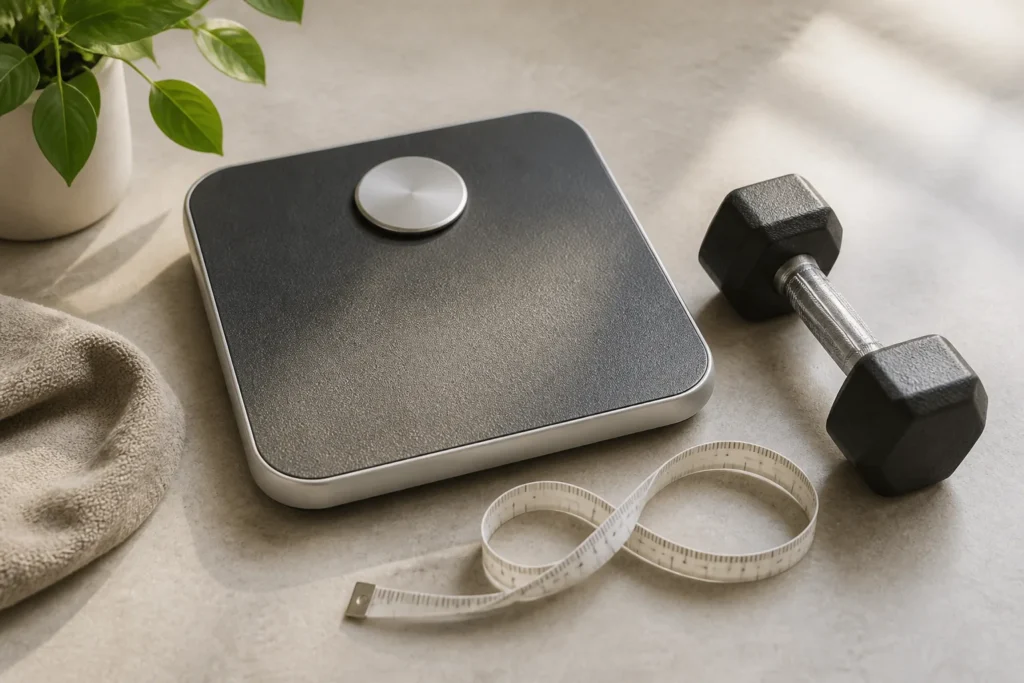
How much can body weight normally fluctuate from day to day because of water, food, and digestion?
Daily scale readings can shift for reasons that have little to do with fat loss. Body weight can naturally fluctuate by several pounds in a single day, though the exact amount varies from person to person. The table below compares reported scale changes in three circumstances.
For example, a quart of water weighs about two pounds and can show up on the scale right away if you drink it without exercising. Bathroom use, including bowel movements and urination, can change your weight reading, and a large meal may make the scale read higher later in the day. A one- or two-pound drop after a gym visit isn’t uncommon, either. These examples help explain why a single reading can be noisy; they don’t establish a universal amount of normal fluctuation.

How long should weight stay unchanged before it counts as a fat-loss plateau?
There isn’t one standard time limit for calling unchanged weight a plateau. One common definition describes a weight-loss plateau as two or more weeks without scale movement while you maintain your diet and exercise. Another uses a longer trend: weight that stays flat or rises over three to four weeks while intake and activity remain unchanged.
Those are source-specific definitions, not a universal rule. That’s why it helps to separate a short pause from a sustained pattern. If you’re deciding what your own readings mean, consider whether your weighing conditions have been consistent and whether the overall trend—not just one number—has stayed flat. A few unchanged readings alone don’t establish that fat loss has stopped.
How can you tell whether a plateau is real or just a short-term scale fluctuation?

What progress measures besides scale weight can show changes in body composition?
Measurements and everyday changes can give you a fuller view of progress than scale weight alone. You can track waist and hip measurements, progress photos, strength progression, and how your clothes fit. Body mass index can even stay flat or rise somewhat as you gain muscle, so maintaining weight while gaining muscle may still reflect real progress in body composition.
In my coaching practice, I tracked weight loss, energy levels, and adherence. That describes what I tracked; it isn’t evidence that every person will see the same result. Choose a few measures you can record consistently, then compare them over time. If the scale is steady but measurements, strength, or clothing fit are changing, those signals can add useful context to the number.
What safe changes to eating or activity can help if weight remains unchanged for several weeks?
If your weight has stayed unchanged for several weeks, start with manageable adjustments rather than drastic cuts. Set small, achievable lifestyle goals and make protein a staple of meals and snacks. Strength training may help preserve or add muscle, with two to three weekly resistance-training sessions focused on compound movements often recommended as a plateau strategy.
A sustained daily energy deficit of 500–750 kcal is widely studied, and choosing water instead of calorie-rich drinks can help reduce overall energy intake. Neither figure is a required prescription for you, and you should avoid drastic calorie cuts because they can accelerate muscle loss and metabolic adaptation.

When should unexplained weight changes or a prolonged plateau be discussed with a healthcare professional?
Unexpected weight changes are a reason to talk with a doctor. Factors like hypothyroidism and certain medications may hinder weight loss. If your weight or measurements haven’t moved despite consistent effort, consider a medical evaluation after six or more weeks of a consistent pattern. That timing is just one source’s suggestion; it isn’t a universal threshold.
Professional evaluation is also recommended for persistent fatigue, hair thinning, feeling cold, irregular menstrual cycles, or difficulty losing weight despite a verified deficit. These signs don’t establish a cause on their own. Bring your questions and a clear account of your progress to a healthcare professional, especially if changes are unexpected or the plateau is prolonged. A professional can help assess whether a health factor or medication may be involved.
| Reported scale-weight change | Circumstance |
|---|---|
| About two pounds | Drinking a quart of water without exercising |
| One or two pounds | After going to the gym |
| Several pounds (varies by person) | In a single day |
Key Takeaways
- Compare consistent weigh-ins and use a seven-day average to smooth daily noise.
- Track waist and hip measurements, photos, strength progression, and clothing fit alongside scale weight.
- Favor small, achievable goals and avoid drastic calorie cuts.
- Discuss unexpected weight changes or a prolonged plateau with a healthcare professional.
Frequently Asked Questions
What factors can keep body weight steady even when body fat is decreasing?
Body weight can stay steady during fat loss when muscle is gained, or when water retention and glycogen storage mask changes on the scale.
How much can body weight normally fluctuate from day to day because of water, food, and digestion?
One source reports daily fluctuations of 2 to 6 pounds, but a review doesn’t specify a standard day-to-day amount. Water, meals, and bathroom use can also affect the reading.
How long should weight stay unchanged before it counts as a fat-loss plateau?
One source defines a plateau as two or more weeks without scale movement, while another looks for a flat or rising trend over three to four weeks. There’s no standard definition in the reviewed research.
How can you tell whether a plateau is real or just a short-term scale fluctuation?
Use consistent weighing conditions and compare seven-day averages; a flat or rising trend over three to four weeks with unchanged intake and activity may indicate a plateau.
What progress measures besides scale weight can show changes in body composition?
Waist and hip measurements, progress photos, strength progression, and how your clothes fit can show changes beyond scale weight.
What safe changes to eating or activity can help if weight remains unchanged for several weeks?
Consider small, achievable goals, protein at meals and snacks, and resistance training; sources also discuss a studied daily deficit range and choosing water instead of calorie-rich drinks.
When should unexplained weight changes or a prolonged plateau be discussed with a healthcare professional?
Talk with a healthcare professional about unexpected weight changes, or a prolonged plateau. One source recommends medical evaluation after six or more weeks of consistent effort without movement in weight or measurements.